Mapping Alias Variants Across Gaming Forums: Numbered Lists and Dimensional Catalog Systems
David Klein · Sep 15, 2026
Mapping Alias Variants Across Gaming Forums: Numbered Lists and Dimensional Catalog Systems
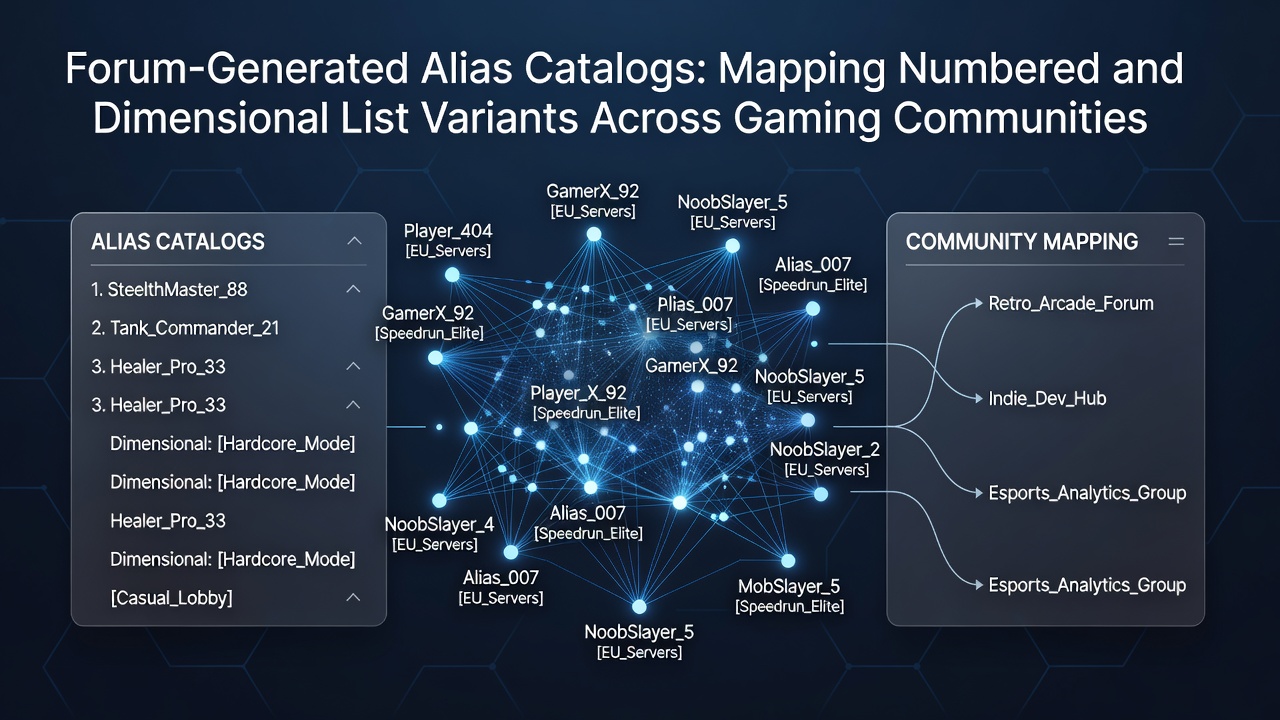
Forum-generated alias catalogs have developed into structured systems that organize player nicknames into numbered sequences and multi-dimensional variants, allowing communities to track identities across different games and platforms. These catalogs emerge from discussions on bulletin boards, dedicated ranking sites, and specialized threads where users submit, sort, and refine entries over time.
Origins of Numbered Alias Lists in Online Communities
Early gaming forums in the late 1990s and early 2000s began compiling simple numbered lists to rank popular aliases, clan tags, and nicknames used in multiplayer sessions. Observers note that participants often contributed entries based on frequency of sightings in servers or tournament logs, creating sequential catalogs that ranged from top 10 to top 100 formats. Data from archived threads shows these lists frequently incorporated regional preferences, with Russian-language forums producing extensive collections of Cyrillic variants alongside Latin transliterations.
Numbered systems provided clear reference points for new members, enabling quick lookups when disputes arose over alias ownership or reuse. Researchers who examined preserved forum archives found consistent patterns where entries included origin notes, associated games, and cross-references to similar handles used elsewhere.
Dimensional List Variants and Cross-Platform Mapping
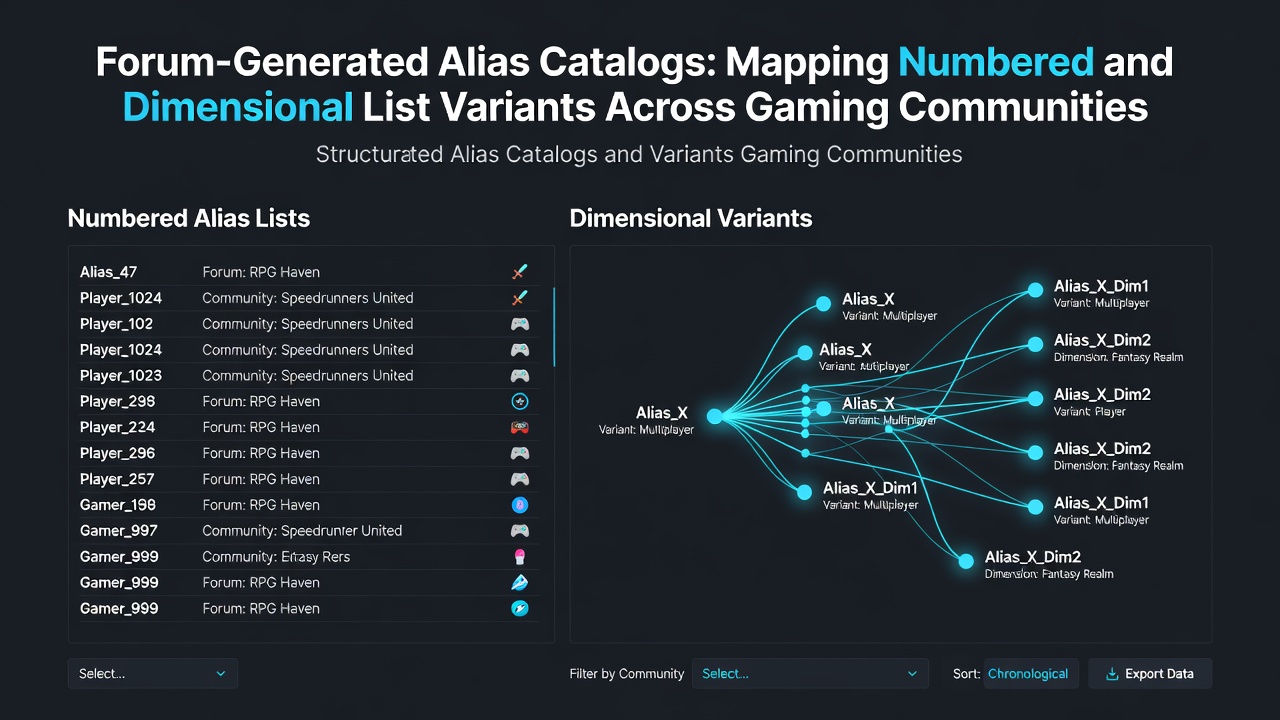
Dimensional variants extend basic numbered lists by adding layers that reflect different contexts, such as game-specific adaptations, clan affiliations, or temporal shifts in usage. One approach documented in multiple communities involves tagging aliases with dimensions like primary game title, secondary platform, and historical period of prominence. This method allows catalogs to expand without losing original sequence integrity while accommodating entries that appear in several environments simultaneously.
Communities maintain these systems through collaborative editing, where moderators verify submissions against server logs or screenshot evidence before integration. Figures from forum activity logs indicate that peak contribution periods often coincide with major game releases, when influxes of new players generate fresh alias data requiring catalog updates.
Current Practices Observed in September 2026
As of September 2026, several established forums continue refining their alias catalog frameworks with updated tools for variant tracking. Reports compiled by industry groups such as the Entertainment Software Association highlight increased use of automated scripts that scan public match data to suggest new entries for human review. These tools reduce manual workload while preserving community oversight of final catalog structure.
European gaming associations have documented similar catalog maintenance efforts, noting that dimensional layers now frequently include metadata on voice chat usage patterns and tournament bracket histories. Academic studies from institutions examining digital identity formation show that numbered lists remain foundational, yet communities increasingly layer additional dimensions to capture alias evolution across titles released in recent years.
Regional Variations in Catalog Construction
North American forums tend toward compact numbered lists focused on competitive leaderboards, whereas Asian communities often incorporate extended dimensional fields covering language-specific transliterations and regional server distinctions. Australian research groups have reported hybrid models that blend both approaches, creating catalogs suitable for cross-continental player tracking. These differences reflect varying priorities in how alias data supports community governance and event organization.
Case examples from preserved forum records illustrate one instance where a single alias appeared in 14 separate dimensional entries across three numbered lists, each tied to distinct game environments and time frames. Such mappings help identify patterns of reuse that might otherwise remain fragmented across isolated discussions.
Conclusion
Forum-generated alias catalogs continue serving as reference tools that organize player identities through numbered sequences and layered dimensional variants. Ongoing contributions from gaming communities sustain these systems, supported by external data sources that inform verification processes. The structures observed in September 2026 demonstrate steady adaptation to new platforms while retaining core organizational principles established in earlier decades.