Deciphering Player Hierarchies Through Aggregated Alias Data from Variant Russian Leaderboard Formats
David Klein · Oct 27, 2026
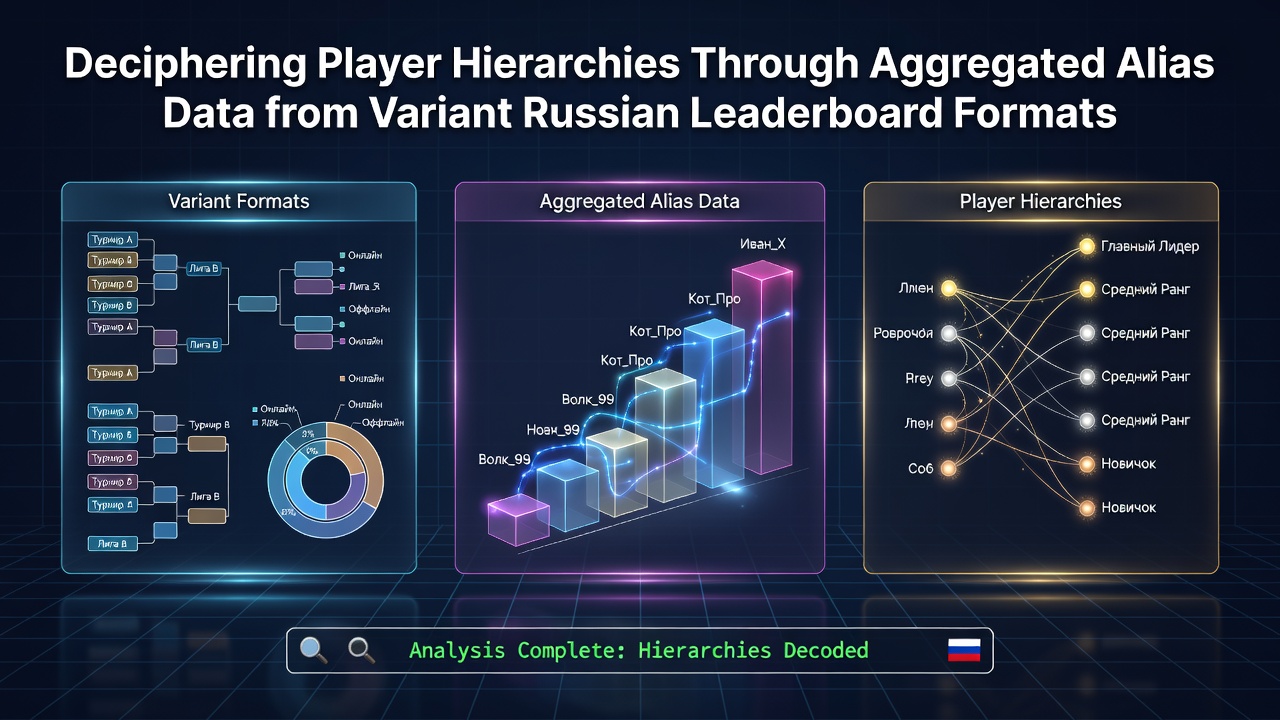
Deciphering Player Hierarchies Through Aggregated Alias Data from Variant Russian Leaderboard Formats
Russian online gaming platforms maintain several distinct leaderboard structures that record player performance across different game modes, and analysts have begun combining alias records from these variant formats to map out underlying hierarchies in competitive scenes. Data collection efforts often focus on platforms that host real-time rankings for multiplayer titles popular in the region, where participants use consistent or rotating aliases to track progress over months or years. Observers note that cross-referencing these lists reveals patterns in how top performers maintain positions despite changes in game rules or server migrations.
Understanding Variant Leaderboard Structures
Leaderboards in Russian gaming communities appear in formats that range from daily snapshots to seasonal aggregates, and each version captures different metrics such as kill counts, match wins, or resource accumulation. One common structure emphasizes individual scores while another incorporates clan-based contributions, which creates opportunities for alias aggregation across both types. Researchers have documented cases where a single player appears under multiple aliases in separate formats, and matching those entries through statistical overlaps in performance data allows clearer identification of hierarchy levels. Figures from October 2026 show increased activity on these platforms following updates to several popular titles, with new leaderboard variants introduced to accommodate expanded player bases.
Aggregation Methods and Alias Matching
Analysts apply techniques that link aliases by comparing timestamps, score distributions, and geographic indicators embedded in the data, and these methods help distinguish between genuine high-ranking players and those who switch identities to evade detection. Studies indicate that aggregation reduces noise in raw rankings because variant formats sometimes reward different play styles, yet the underlying skill hierarchy remains consistent when data merges properly. For instance, a player who dominates in solo formats but participates less in team modes can still surface near the top once aliases align across both. Data shows that automated scripts now scan public leaderboards hourly to capture these shifts, producing datasets that grow larger each quarter.
What's interesting is how alias overlaps often cluster around specific events, such as major tournaments held in late summer or early fall, and these clusters provide evidence of coordinated group strategies within hierarchies. Observers have tracked instances where lower-tier aliases feed resources to higher ones, and aggregation highlights the flow of influence from supporting players upward. In October 2026 reports, several platforms released API access that simplified such data pulls while maintaining privacy standards set by regional regulations.
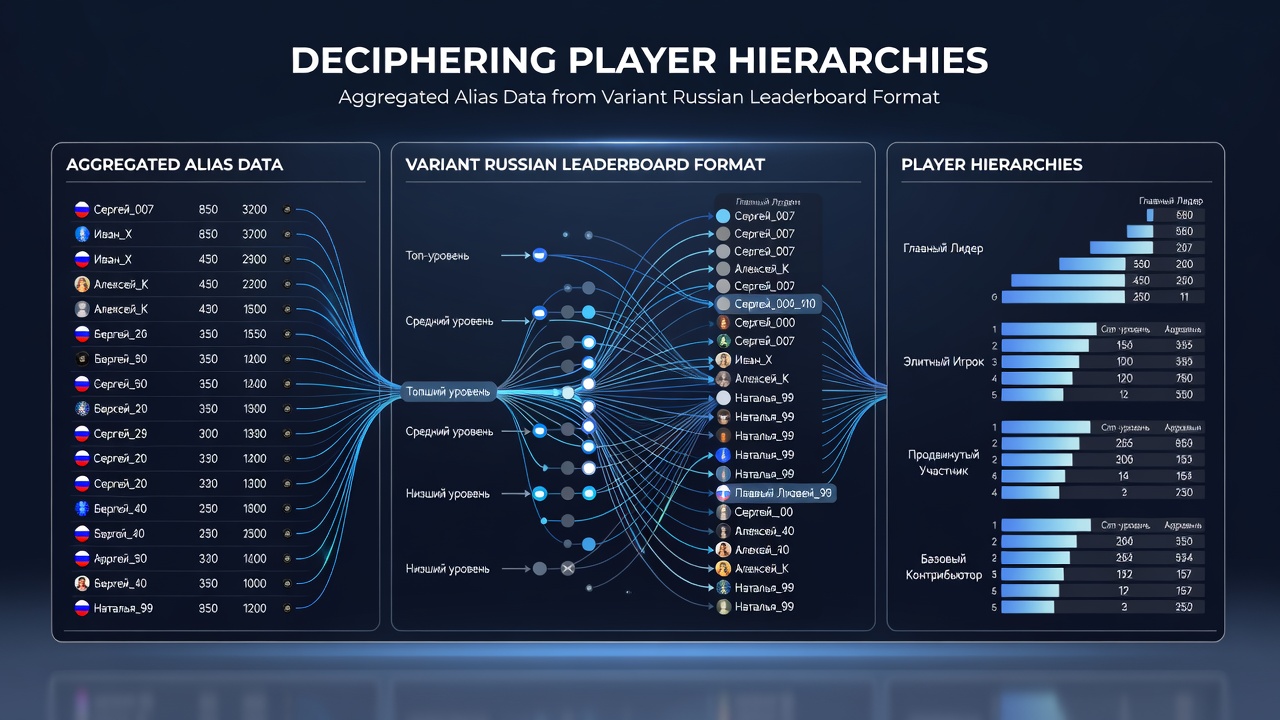
Revealing Hidden Hierarchies Through Combined Data
Combined datasets expose layers that single leaderboards obscure, because variant formats emphasize distinct aspects of gameplay while the same core group of skilled players occupies upper tiers across most of them. Evidence suggests that players near the apex maintain multiple aliases to test strategies or manage visibility, and aggregation maps these connections without relying on self-reported information. Those who've examined merged records find that hierarchy depth often reaches five or six tiers below the visible top twenty, with performance metrics showing gradual drops rather than sharp cutoffs. Turnout spikes in October 2026 coincided with seasonal resets on multiple platforms, generating fresh alias entries that analysts incorporated into ongoing models.
One study revealed that cross-format matching improves accuracy in identifying consistent performers, whereas isolated lists frequently overstate short-term surges. Researchers discovered similar patterns when they compared data from earlier years, confirming that hierarchy structures persist even as individual aliases rotate. But here's the thing: success in aggregation depends on handling incomplete records, since some formats purge older entries faster than others.
Current Trends in Data Utilization
Industry organizations such as the Entertainment Software Association have published general findings on global gaming data practices, and these align with observations from Russian platforms regarding the value of aggregated metrics. Academic sources from institutions like those affiliated with the University of Melbourne have explored similar techniques in broader esports contexts, noting how alias tracking informs competitive balance discussions. Application of these approaches continues to expand as more variant formats emerge, particularly after the October 2026 platform updates that introduced hybrid scoring systems.
Practical Implications for Analysis
Communities that rely on these leaderboards benefit when hierarchies become more transparent through aggregation, because it supports fairer matchmaking and event seeding. Data indicates that platforms adopting merged views report higher retention among mid-tier players who see clearer paths upward. Yet challenges remain around alias verification, since manual confirmation scales poorly with dataset size. Observers note steady improvements in machine-learning tools that flag likely matches based on behavioral signatures rather than exact name strings.
Conclusion
Aggregated alias data from variant Russian leaderboard formats continues to provide detailed views of player hierarchies that individual lists cannot match on their own. As platforms evolve and new formats appear, the methods for combining records will likely refine further, offering ongoing insights into competitive structures within these communities.